William Roache
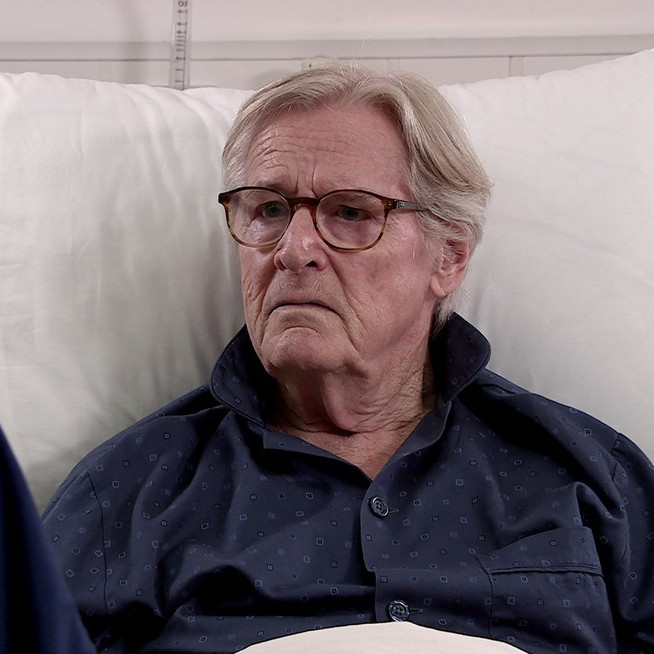
Eyewear Styling for Bill Roache (Coronation Street’s Ken Barlow)
Some styling projects are driven by personal taste and
self-expression. Others - especially when it comes to glasses for the film and TV industries - are rooted in
continuity, technical precision and the responsibility of maintaining a
character the public has known for generations.
My work with Bill Roache, best known as Ken Barlow on
Coronation Street, was very much the latter.
Bill has played Ken Barlow since the very first episode in
1960 and holds the Guinness World Record for the longest-serving actor in a
continuous TV role.
His appearance is iconic, and his glasses are part of that.
So when the Coronation Street Costume Department contacted me, the brief wasn’t
to evolve the look, it was to honour it.
My role was simple in principle: make sure Ken Barlow’s
glasses stayed visually consistent, camera-ready and technically flawless for
modern HD filming.
In practice, it meant working with decades of audience
familiarity, a tight brief from the production team and the specific technical
requirements that come with being on camera five days a week.
Here’s how we approached it.
Understanding the Brief: Consistency, Clarity
and Camera-Readiness
Unlike many of my celebrity eyewear
styling sessions, the frames weren’t chosen based on Bill’s personal
style. The priority was the character - a man who’s instantly recognisable
across the UK and whose glasses have become part of his on-screen identity.
The costume department already had the style and frame shape
picked out. Ken Barlow’s eyewear has remained largely unchanged for years, and
any major deviation would stand out immediately to regular viewers. They
weren’t looking for new ideas or a modern twist. They were looking for
technical expertise that would keep the character’s appearance seamless on
camera.
That meant working within a fixed set of parameters:
●
Stick closely to Ken Barlow’s established look
●
Ensure absolute clarity for Bill during long filming
days
●
Eliminate reflection from every possible camera angle
●
Produce lenses that performed consistently under bright
studio lighting
●
Respect the heritage of a character who has been on
screen for more than sixty years
Technical Considerations for TV Filming
Styling for TV brings a very different set of challenges
compared to everyday eyewear. Studio lights, reflective surfaces and HD cameras
all play a part in how glasses appear on screen.
As well as styling, this is where my work as a qualified
dispensing optician comes in. Eyewear styling isn’t just about
choosing the right frame, it’s about making sure the final pairing looks good
as a whole.
A frame can look great on its own, but if the prescription
lenses aren’t designed and fitted correctly, you can end up with thick edges,
bulging profiles, or lenses that magnify or minify the eyes dramatically.
That’s the last thing you want on television.
Then there’s the issue of lens reflection. Without the right
coating and finish, glasses can easily bounce light directly back at the camera
- something that can disrupt a scene or create unwanted distractions for the
audience.
Standard lenses simply don’t perform well enough under those
conditions.
For Bill’s glasses, the lenses needed:
●
Ultra-low reflectivity
●
A finish that stayed clean and clear from every angle
●
Consistent behaviour under both static lighting and
moving shots
●
Optical clarity that didn’t distort or interfere with
close-up work
This wasn’t just a creative styling project. It was
an exercise in technical precision.
The goal was to make the glasses almost invisible on screen.
Not in appearance, but in effect. They needed to do their job without ever
drawing attention to themselves.
Getting this right meant taking professional optical
measurements that go far beyond basic dispensing. I assessed Bill’s optical
centres within the frame, the angle the frame sits at when he wears it, and the
exact distance the frame sits from his face.
All of these elements affect optical clarity and visual
comfort, and, crucially for TV, they determine how clean and cosmetic the
lenses look on camera.
Even a tiny change in angle or positioning can alter how a
lens reflects light back into the studio.
Working With the Costume Department
Collaborating with a production team is very different from
working directly with a client, and it’s something I genuinely enjoy.
The Coronation Street Costume Department knew exactly what
they needed from a character perspective, and I brought the optical and
technical expertise to support it.
They provided the frames, already chosen to reflect Ken
Barlow’s familiar style. My responsibility was to assess the fit, refine the
lens specification and make sure the final result matched the show’s visual
requirements.
While the glasses were selected specifically for Ken Barlow,
they also became a practical option for Bill away from set, so the fit and
clarity had to support both worlds.
It was a smooth, collaborative process that highlighted the
amount of care that goes into maintaining the continuity of long-running
television characters.
Coronation Street has incredibly dedicated teams behind the
scenes, and it was great to play a small part in supporting a character with
such a long legacy.
Delivering the Perfect On-Screen Solution
The final lenses provided:
●
Exceptionally low reflectivity
●
A neutral appearance that stayed consistent on HD
cameras
●
Practical comfort for long filming sessions
●
Visual clarity that supported Bill’s performance
●
A seamless match with Ken Barlow’s established look
The costume department was really pleased with the result.
The glasses looked exactly as they should: understated, familiar and completely
in keeping with the character’s long-standing image.
For viewers at home, Ken Barlow continues to look like Ken
Barlow… which is exactly the point.
A Unique Project to Work On
Most of my work involves helping people express themselves
through eyewear - finding frames that reflect their personality, lifestyle or
creative identity.
Working on a character like Ken Barlow is different, but
equally rewarding. It’s about protecting a visual legacy and ensuring the
technical side of filming is never interrupted by something as simple as a
reflection.
Being trusted with part of the look of a character who has
been part of British television for more than sixty years is a real privilege.
It’s a reminder that eyewear isn’t just a fashion accessory - sometimes, it’s
part of storytelling.
If you’re looking for personalised eyewear styling, whether for everyday wear or on-screen use, you can reach me here.